Thoughts / 2 min read
Being Blind
By Gowtham
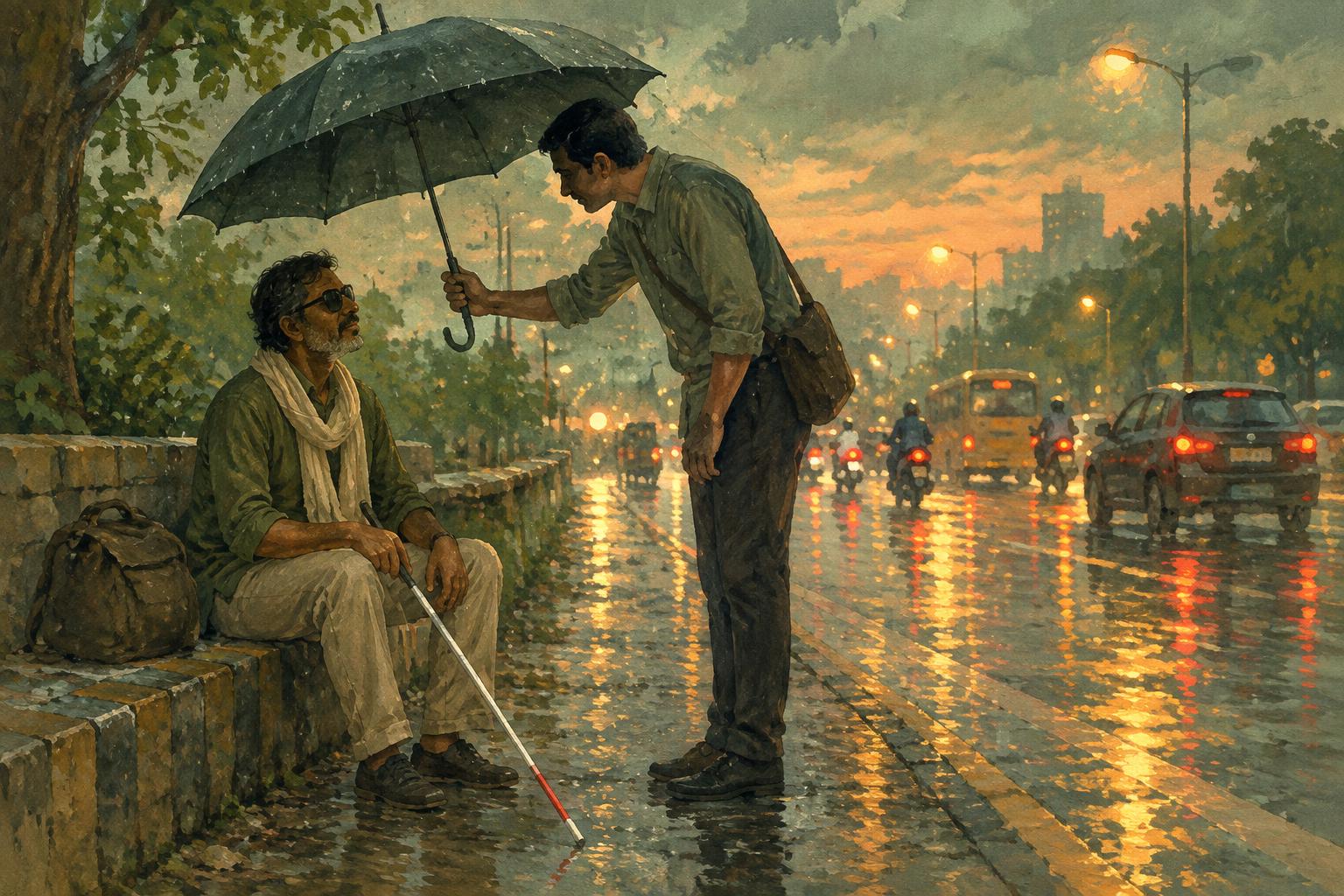
Vikram, a visually challenged man in India, lived a life of struggle. Every day, he faced chaotic roads filled with honking vehicles, broken pavements, and potholes . Crossing the street was terrifying. zebra crossings and traffic signals were ignored. He always wondered “Am I the one who’s blind, or is it those who choose to ignore these traffic rules?”
Relying on strangers became a necessity, as his guiding stick frequently got stuck in open drains or on broken pavements. Each step was a risk, but he had no alternative.
One rainy evening, while returning home from a rehabilitation event, Vikram slipped and fell on a waterlogged road. As he sat by the roadside, soaked and in pain, he muttered, “How can a blind man live with dignity here?” His words, however, were drowned out by the relentless honking of vehicles. The busy crowd, once again, turned a blind eye to him.
Months later, everything changed when Vikram was invited to a rehabilitation program in the Netherlands. The moment he arrived, he was struck by the contrast. Smooth pavements, dotted tactile, guiding lines for his stick, and audible pedestrian signals gave him a new sense of independence.
Cars paused to let him cross, and bicycles passed with warning bells. For the first time, he felt safe, respected, and free to move without fear.
Upon returning to India a few months later, Vikram couldn’t overlook the chaos he had once accepted as normal. But this time, he decided to act. Teaming up with the NGO that had supported him, he began raising voice for accessible roads, proper sidewalks, and functioning traffic signals.
Slowly, small changes began to emerge. Progress was slow, but Vikram remained positive. He thought to himself, “one day, Indian roads will be as safe and accessible as those in the Netherlands.”
He envisioned an India where roads would ensure safety and dignity for everyone—roads designed to serve not just those who can see them, but also to those who cant!
Hereby,
Gowtham